
Cymbidium Seedling vs Mericlone: why the difference matters
If you grow Cymbidium orchids, you will soon come across two terms: seedling and mericlone. The seedling vs mericlone argument is an old one yet they describe very different plants. A seedling grows from seed, so it is a genetic one-off. A mericlone is grown from a tiny piece of tissue, so it should exactly match the plant it came from.
The seedling vs mericlone difference affects what you pay, how long you wait for flowers and what you see when the buds open. It also explains why hybridisers raise thousands of seedlings, while nurseries multiply only the very best ones as mericlones.
This seedling vs mericlone guide explains both terms in plain English. It covers how each plant is made, how orchid clubs judge them, what can go wrong and what to ask before you buy. First, though, let’s look at where every Cymbidium in your collection comes from.
Seedling vs Mericlone – The short answer
A Cymbidium seedling grows from seed, so it differs from every one of its siblings. A clone, or mericlone, is a tissue-culture copy of one chosen plant and should flower identically to the original. Hybridisers grow seedlings to find new varieties, then nurseries use mericlones to multiply the best ones quickly.
Where do Cymbidium orchids come from?
A new Cymbidium plant arrives in one of four ways. Two methods copy an existing plant by cutting it up. The other two start in a laboratory.
Division
A division is a piece of a large plant, split into two or more sections. Growers and hobbyists often prefer divisions because they flower identically to the plant they came from. A division also gives you a new plant straight away and increases the size of your collection. Better still, it costs nothing, and you can sell it or swap it for another variety.
Back-bulb propagation
A back-bulb is a leafless bulb that you remove from a large plant when you divide it. Pot the back-bulb on, and it may produce side growths. These grow into green bulbs, and they often flower two to three years after you remove the back-bulb from the mother plant. Back-bulbs match the mother plant in the same way divisions do, so they also grow your collection for free.
Both methods carry one hidden risk, however. Cymbidium mosaic virus and Odontoglossum ringspot virus spread when growers divide infected plants or cut with a contaminated knife. An infected plant cannot be cured. Ensure you disinfect your cutting tools after every plant. We also suggest using multiple knives, so some can be cleaned while you cut with another.
Seedling
A seedling grows from seed produced by crossing two orchids. Every seedling is genetically new, so no two look exactly alike. The next section explains seedlings in detail.
Mericlone
A mericlone grows from a tiny piece of tissue that a laboratory multiplies into many plants. Each mericlone should match the plant it came from. We cover mericlones in detail further down.
In short, divisions and back-bulbs give you copies of a plant you already own. Seedlings and mericlones come from nurseries and hybridisers, and they serve very different purposes.
What is a Cymbidium seedling?
Cymbidium orchids grew in the wild long before anyone bred them. Today, most Cymbidiums in our shade houses are hybrids, many many generations removed from those original wild collected plants and a mixture of several of them. Hybridisers keep that work going. They selectively pollinate superior plants, collect the seed and grow new varieties from it. We call those new plants seedlings.
How is a seedling is made?
A seedling grows from seed produced by crossing two flowers from different plants. A hybridiser can also pollinate a flower with its own pollen, which growers call a selfing. Either way, the seedling shares some characteristics of both parents, and it takes several years to grow on and flower.
Each seedling differs from its siblings, much like human brothers and sisters from one set of parents. A seedling might receive a registered name, such as Cym. Molten Gold. Alternatively, growers might know it only by its parents, for example Cym. Scott’s Sunrise × Cym. Crater.
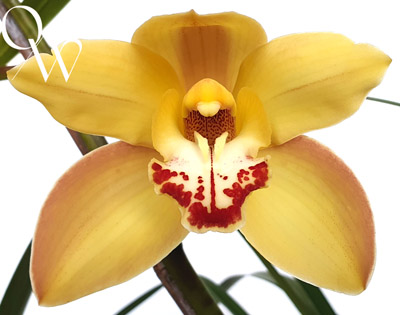
Cym. Molten Gold ‘Leanowana Belle’
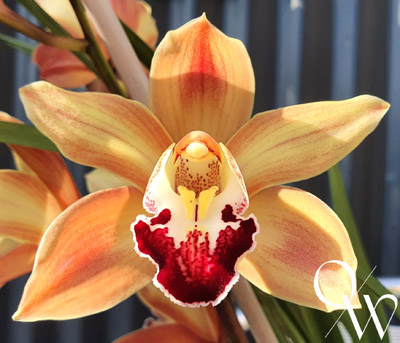
Cym. Molten Gold ‘Corinna’
Seedlings from the same cross look very different
Cym. Molten Gold ‘Leanowana Belle’ and Cym. Molten Gold ‘Corinna’ show how much siblings can vary. I have two plants from the same cross, Cym. Scott’s Sunrise × Cym. Crater, which the breeder registered as Cym. Molten Gold. They came from the same seed pod and grew together in the same community pot. Even so, they look vastly different.
Growers call such plants siblings. Hybridisers often grow and flower hundreds of siblings so they can choose the very best of a cross. They then clone the best ones, or mericlone them for commercial sale.
How seedlings start: from seed capsule to flask
Orchid seed is tiny and carries almost no food. In nature, it needs a fungus to help it germinate. According to Wikipedia’s summary of Lewis Knudson’s work, that fungus-assisted method was the only known way to raise orchids from seed until the early 1920s. Then Knudson, an American botanist, published a method that germinates seed on a sterile nutrient medium with no fungus at all. Hybridisers still sow seed in sterile flasks today.

The biggest cost in Cymbidium propagation is time. In my experience, from pollination to seed pod harvesting, takes between eight to 14 months to obtain mature seed. Once sown in a flask, germination can take from 6 weeks to maybe months. After that, the seedlings grow in their flask for about eight months, move to community pots and spend years growing on. At least three years is needed for Cymbidium orchids raised from seed to flower after being planted out, and some even more.
Seedlings start life virus-free
Generally, seedlings have one practical advantage. As long as both parents are virus free, the seedlings will be too.
Many argue that a virus-infected parent will not transmit the virus. There is still a significant difference of opinion on this topic, however some research does suggests this to be true. Some reports state that Cymbidium mosaic virus and Odontoglossum ringspot virus are not known to pass through seed. I have not reviewed any research that contained a mention of fleck virus though.
It seems obvious to state though, that best practice when hybridising is to only breed with virus free plants. To truly guarantee virus free plants.
Seedlings can still catch a virus later, however, from a contaminated knife or an infected neighbour. Good hygiene keeps mattering long after the flask.
Seedling vs Mericlone – How orchid clubs judge them
Orchid clubs will promote and judge a seedling vs mericlone very differently.
promote the development of new and better varieties, and most run a seedling division in their monthly judging. To tell new varieties apart, clubs treat a plant grown from seed as a seedling until it flowers for the first time. On the show bench, seedlings compete only against other seedlings. Sometimes a seedling is so good that it wins a national award, and then everyone wants it.
Judging conditions vary from club to club, but a few are common. The seedling plant must be undivided. It counts as a seedling until the end of the flowering season in which it first flowered. Some clubs also limit pot size, so a big, reluctant flowering plant does not compete against smaller, fast-flowering newcomers.
Mericlones are not separately judged and do not have their own division, so I would suggest that if you are looking for variety and possibly winning a division, then grab some new seedlings and watch them grow!
Choosing parents and selecting good seedlings
If you judge well and select seedlings with good potential, you are likely to flower some good new varieties. The more seedlings you grow, the better your chance of finding a good one. You cannot overstate the importance of good parents. Ordinary or substandard parent plants usually fail and bring disappointment, while other growers improve their collections.
Serious growers raise large numbers of seedlings and discard the inferior ones after flowering. They also cull plants that grow poorly before they flower. Good selection and patience are essential. Look to successful growers who raise lots of seedlings for guidance. Be wary of advice or purchases from growers who are not prepared to grow lots of what they sell.
What is a Cymbidium mericlone?
A mericlone is a clone of one particular plant: in practice, an exact copy. The word joins meristem, the growing tip of a shoot, with clone. Mericlones of a particular plant should all look like it and flower the same way. They still take several years to grow on and flower, though.
Growers report one exception though. Feathered and splash flower mutations, which have become very popular, very rarely clone true to form. For a guaranteed copy of any plant, a division or back-bulb still remains the most reliable route.

When a superior new variety appears, everyone wants a piece of it, yet there is only one original. That demand is where mericlones come in. Cym. Valley Olympic ‘Pink Perfection’ is a good example of a popular plant that growers have cloned widely.
How mericloning works
Mericloning starts in a clean area of a laboratory. A technician removes a very small piece of tissue from a mother plant, smaller than a pinhead, and places it in a small sterile container with a nutrient-rich growing medium. The technician keeps it warm and well lit, and the tissue starts growing larger.
When the tissue is big enough, the technician removes it under sterile conditions, divides it into three or four pieces and returns them to the container. These pieces become protocorm-like bodies, which resemble the protocorms that form when orchid seed germinates. They grow larger, and the technician chops each one into more pieces again. Once the laboratory has enough bodies, it lets them grow leaves and roots, and they form small plants. Each plant should be genetically identical to the mother plant. We call these plants mericlones.
Usually, a laboratory can produce hundreds of mericlones from one mother plant within twelve months. Some varieties are more difficult and may take longer. Occasionally, it is virtually impossible.
It is now also possible to clone virus out of a plant. Documented scientific literature on virus elimination in Cymbidium orchids has now been published. This includes tissue culture, meristem culture, protocorm propagation, and chemical treatments. This is a process that takes much time and patience. This is a topic for another time and another article. However, Orchid Wise is in the process of working with an Australian based lab who are skilled enough to be successful with this procedure.
What can go wrong with mericlones?
Mericloning is reliable, yet it carries real risks. Four deserve your attention.
1. Genetic variation
Some plants mutate or grow poorly in the laboratory. When they flower, they may not match the mother plant. Growers generally regard the chance of a mericlone flowering identical to its mother plant as better than 95 per cent, and some experts claim 99 per cent.
Sometimes the culture process triggers mutations or other changes in the cells. The risk depends on the source tissue, the number of subcultures, the growth hormones in the medium and, above all, the plant’s own genotype. Shoot tips and buds, which already contain meristems, generally produce fewer variants than leaves, roots or stems.
2. Too many plants from one piece of tissue
There is a risk if a laboratory produces too many plants from one piece of the mother plant. Opinions differ on when old tissue becomes unreliable and the process needs restarting. Some claim no more than 250 plants. Others consider 2,500 quite safe. There have also been suggestions of tens of thousands from one piece of tissue, with minimal problems. I would be very wary of this though. Generally I think the Cymbidium breeding world moves fast enough that a few thousand would be enough to satisfy the worldwide market before it moves on.
I believe the experience of the laboratory technician is probably the key. An experienced operator can see a problem at an early stage and discard the tissue. A less experienced operator may miss it. The mother plant very much matters too. Quality is everything. Some are quite stable, while others mutate quickly, cause problems and need recloning or abandoning.

3. Viruses
Mericloning does not guarantee a clean plant. If the mother plant carries a virus, every mericlone carries it too. And unfortunately a lot of our virus problems have been caused by cloning mother plants that already carry a virus.
Symptoms will not warn you. I have first hand experience that if a plant is grown well, there is a very high chance it will not display symptoms of virus.
Used well, however, meristem culture can also clean up a plant and rid it of virus if done carefully.
4. Pirated tissue
The biggest risk though is pirated tissue. Some nurseries remove a small piece of tissue from a flask they bought from another nursery, multiply it, grow the plants on and offer them for sale. Tissue copied from someone else’s flask has no known history, so nobody can judge how stable it is. Ask any supplier of mericlones where they sourced the tissue. Did the mericlones come from the original mother plant? Does the supplier pirate tissue from other growers? Beware: some suppliers do not give honest answers.
Seedling vs mericlone: at a glance
Seedlings create new a variety, while mericlones and divisions preserve a plant you already like.
| Seedling | Mericlone | Division or back-bulb | |
|---|---|---|---|
| Starts from | Seed from a cross or a selfing/sibling cross | A tiny piece of shoot-tip tissue from one mother plant | A piece of a mature plant |
| Genetics | A new mix of both parents, different from every sibling | A copy of the mother plant | The mother plant itself, cut into pieces |
| Matches the parent? | No, each plant is different | Almost always (over 95 per cent by common estimates); feathered and splash traits may not repeat | Yes |
| Speed | Slowest: about 10 months from pollination to ripe seed, then years in the flask and pots | Hundreds of plants from one mother plant in about a year in the laboratory, then several years to flower | Instant, but only a few plants |
| Main purpose | Find new varieties | Multiply the best varieties quickly | Grow your own collection for free |
| Virus risk | Low at the start, because seed is not known to carry the main orchid viruses | Depends on the mother plant: infected stock gives infected clones unless tested | Carries any virus the mother plant has |
| Name on the label | Grex name (for example Cym. Molten Gold) or just the parents | Cultivar name in single quotes, such as ‘Pink Perfection’ | Same cultivar name as the mother plant |
| Main risk | Quality ranges from great to poor, so growers cull many plants as they grow up | Genetic variation, virus and pirated tissue | Contaminated knives spread virus |
In short, use seedlings to find something new, mericlones to get more of something proven and divisions to expand what you already grow.
How to choose and buy: seedling vs mericlone?
Buy a seedling when you want the chance of something new and you can wait for it to flower. Buy a mericlone when you want a known, proven variety. Either way, ask the right questions before you pay.
Seedling vs Mericlone – Read the name on the label
Orchid names tell you what you are buying. A grex name covers all the seedlings from one cross, such as Cym. Molten Gold. The Royal Horticultural Society registers orchid hybrids, and its guide to orchid names explains that a grex is defined by its parentage, not by how its plants look. A cultivar name in single quotes, such as ‘Corinna’, points to one individual plant or clone.
So Cym. Molten Gold with no cultivar name is a seedling from that cross, and it could look like anything the cross produces. Cym. Molten Gold ‘Corinna’ is one particular plant. Any division or mericlone of it should carry the same cultivar name.
Questions to ask about a seedling
- Who are both parents, and can you show me the cross?
- Have siblings from this cross flowered, and can I see photos of them?
- Roughly when will it flower?
Questions to ask about a mericlone
- Which plant is the mother plant, and where did the tissue come from?
- Did the mericlones come from the original mother plant, or from another nursery’s flask?
- Did anyone test the mother plant for Cymbidium mosaic virus and Odontoglossum ringspot virus, and did they test the plantlets again before release?
A good supplier answers these questions openly. If a seller dodges them, you have learned something valuable.

Seedling vs Mericlone – Frequently asked questions
What is the main difference – seedling vs mericlone?
A seedling grows from seed, so it is genetically unique. A mericlone is a clone grown from a tiny piece of tissue taken from one mother plant, so it should match that plant.
Is a mericlone the same as a division?
Both should match the mother plant, but growers make them differently. A division is a physical piece cut from a mature plant, while a mericlone grows from tissue in a laboratory. A division is the most reliable copy, whereas mericloning lets a nursery make hundreds of plants. Divisions can also pass on virus, so disinfect your knife between plants.
Will a mericlone flower exactly like its mother plant?
Almost always. Growers generally put the odds above 95 per cent, and some experts claim 99 per cent. Occasionally a mericlone mutates and flowers differently, and feathered and splash flowers rarely clone true.
How long does a Cymbidium seedling take to flower?
Several years. A Cymbidium needs about ten months to ripen its seed, and the seedlings then spend years in the flask and pots. Orchids raised from seed generally need at least three years to flower, and some hybrids take ten years or more.
Can a mericlone carry a virus?
Yes, if the mother plant carried one. A Thai survey found Cymbidium mosaic virus in 27.6 per cent of tissue-cultured orchid plantlets from commercial laboratories. Ask suppliers whether they tested the mother plant and the plantlets.
Are seedlings free of virus?
They usually start that way, because seed is not known to carry Cymbidium mosaic virus or Odontoglossum ringspot virus. However, seedlings can still catch a virus later from contaminated tools or infected plants nearby.
Seedling vs Mericlone: which is right for you?
So there is a real difference between a seedling vs mericlone, and each has its advantages. Hybridisers create seedlings to find new and better varieties. Nurseries and growers create mericlones to multiply the best of them quickly. Meanwhile, divisions and back-bulbs let you grow your own collection for free.
Seedling vs mericlone? Whichever you choose, buy from growers who are open about where their plants came from, and ask about virus testing. A good supplier will answer.
This article is based on text originally written and compiled by Graham Morris from the Cymbidium Orchid Club of South Australia. This published article on seedling vs mericlone has been edited, updated and significantly expanded on for use on this site (updated October 2026).
Pingback: Orchid of the Week - Orchid Wise